
Why Handmade Journals Cost More: Real Value Explained
Table of Contents
The Real Cost Behind a Handmade Journal
Where Your Money Actually Goes
Why Mass-Produced Notebooks Cost Less
Labor-Intensive Craft: The Hours You Never See
Artisanal Journal Paper Types and Material Sourcing
The Benefits of Handmade Journals for Mindfulness
How to Choose a High-Quality Journal
Five Checks Before You Buy
Durability, Longevity, and Archival Standards
Environmental Impact: Handmade vs. Mass-Produced
Conclusion
Frequently Asked Questions
Last Updated: September 30, 2026
The Real Cost Behind a Handmade Journal
Handmade journals cost more because every stage of making them, from sourcing artisanal paper to hand-stitching the binding, involves human labor that machines do in seconds. Understanding why handmade journals cost more starts with a simple fact: a mass-produced notebook might take two minutes to assemble, while a hand-bound journal can take hours.
This guide breaks down where your money goes, why the price difference exists, and how to judge whether a journal is worth it.
Where Your Money Actually Goes
Numbers tell the clearest story. A handmade journal's price reflects four cost centers that mass production spreads across thousands of identical units: raw materials, skilled labor, production time, and overhead.
Cost Factor | Handmade Journal | Mass-Produced Notebook |
Labor | Hours of hand-stitching per unit | Seconds of machine assembly |
Materials | Small-batch, often archival paper | Bulk commodity paper |
Production time | Days from start to finish | Minutes |
Overhead | Absorbed across small runs | Spread across millions of units |
Mass-produced notebooks cost less because factories achieve economies of scale. One machine stamps out thousands of covers while the per-unit overhead shrinks to fractions of a cent. A small studio making bespoke journals in limited batches cannot compete on that math, and it shouldn't try.
Why Mass-Produced Notebooks Cost Less
Mass production wins on volume, not on materials or longevity. Factories buy paper by the ton, print covers in single runs, and glue bindings in seconds. That efficiency keeps the price point low, but it also means thinner paper, weaker binding techniques, and a product designed to be replaced rather than kept.
The trade-off is real. A machine-bound notebook may fall apart within a year of daily use, while a hand-stitched journal often survives decades.
Labor-Intensive Craft: The Hours You Never See
Hand-binding is labor-intensive by design. A single journal passes through folding, punching, stitching, and pressing, and each step demands a level of skill acquisition that takes years to develop.
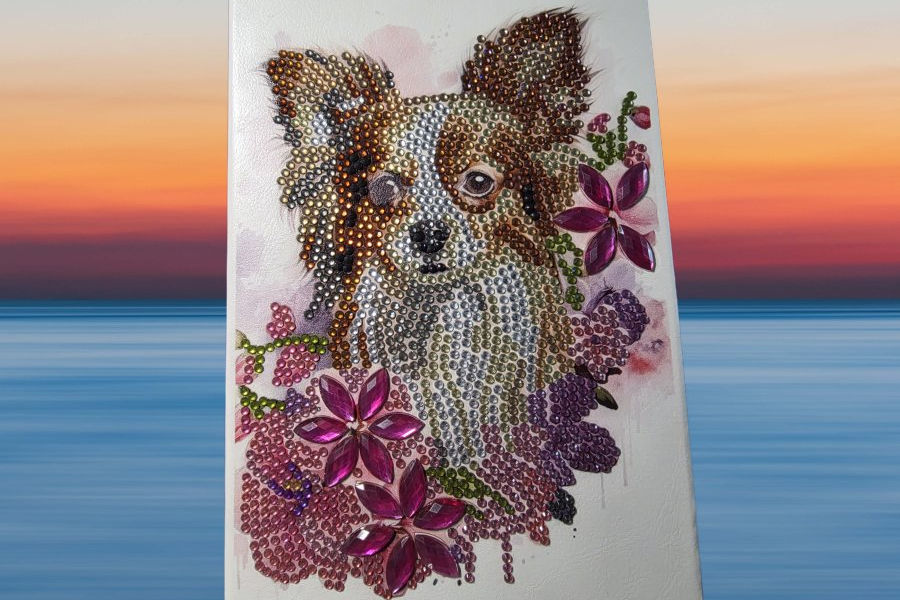
What most guides miss is that the visible product hides the invisible labor. The alignment of a spine, the tension of each stitch, the trimming of page edges: these are decisions a person makes, not a machine.
Pro Tip Ask any binder how long a single signature takes to stitch by hand. A full journal may contain eight or more signatures.
Artisanal Journal Paper Types and Material Sourcing
Paper choice drives both cost and experience, and the gap between a commodity notebook sheet and an artisanal one is measurable. Artisanal journal paper types range from cotton rag to recycled blends to tree-free fibers, and each carries a different price because small-batch sourcing cannot ride the same volume discounts factories negotiate.
Here is what the labels actually mean, and why each one costs more:
Cotton rag: Made from cotton linter (a byproduct of textile processing) rather than wood pulp. Long cotton fibers interlock into a strong, soft sheet that resists tearing and holds up to erasing. Small mills run it in short batches, so per-sheet cost runs well above commodity wood-pulp paper.
Recycled blends: Post-consumer and post-industrial fiber, often mixed with virgin pulp for strength. Cost depends heavily on how much sorting and de-inking the fiber requires; a clean pre-consumer stream is cheaper than a mixed post-consumer one.
Tree-free fibers: Bamboo, hemp, and bagasse (sugarcane residue). These grow fast and process with less chemical load, but the pulping infrastructure is smaller, so the per-unit price is often higher than wood pulp despite the sustainability win.
Acid-free vs. archival: Acid-free paper is manufactured with a neutral pH (typically buffered with calcium carbonate) so it resists yellowing. Archival paper meets additional standards for longevity and lignin content, meaning it can hold ink and pencil for decades without degrading. Both labels signal the paper was made to last, not used up and discarded.
The numbers that matter when you compare sheets:
Property | What it tells you | Why it costs more |
GSM (grams per square meter) | Sheet weight and stiffness | Heavier sheets use more fiber per page |
pH (7.0 or slightly above) | Acid-free status | Buffering agents and testing add cost |
Fiber length | Tear and fold strength | Long-fiber pulp is scarcer and pricier |
Sizing (internal vs. surface) | Ink holdout and bleed resistance | Internal sizing is applied throughout the sheet, not just on top |
The pen test, the check most guides skip. Before you trust a paper claim, run a simple ink-bleed test. Draw a single line with the pen you actually use, wait ten seconds, then flip the sheet. On commodity 60-70 GSM paper, fountain pen ink typically feathers along the fibers and ghosts through to the reverse. On a 100+ GSM cotton or sized sheet, the line stays crisp and the reverse stays clean. That difference is not marketing; it is fiber length and sizing doing their job.
The tactile quality matters too.
Pro Tip Ask the maker for the GSM and pH of the paper before you buy. A studio that can answer in specifics is a studio that knows its supply chain, and that transparency is part of what you are paying for.
The Benefits of Handmade Journals for Mindfulness
The benefits of handmade journals for mindfulness come down to how the object invites you to slow down. A journal that feels substantial in your hands changes the ritual of writing. The tactile quality of the paper, the weight of the cover, the resistance of a hand-stitched spine as it opens flat: these details create a physical pause that a thin spiral notebook rarely matches.
How to Choose a High-Quality Journal
Knowing how to choose a high-quality journal comes down to a handful of checks you can run before you buy. Price alone tells you little; construction tells you everything.
Five Checks Before You Buy
Binding: Look for hand-stitched or sewn signatures, not glued spines that crack with use.
Paper: Confirm the paper is acid-free or archival, and check the weight if you use wet media.
Ink bleed: Test a page with your usual pen. Good paper holds the line without feathering.
Lay-flat design: A journal that opens flat is easier to write in, especially near the spine.
Materials: Ask where the paper and cover stock come from. Transparency signals a maker who cares.
Durability, Longevity, and Archival Standards
Keep it out of direct sunlight, which fades covers and accelerates paper degradation.
Store it in a climate-controlled room; damp basements and hot attics degrade even archival paper.
Handle older pages with clean, dry hands to avoid transferring oils and moisture.
Store upright or flat, not crammed spine-down in a tight shelf, which stresses the binding.
If the cover is leather, condition it occasionally with a pH-neutral leather balm to prevent drying and cracking.
Watch Out Storing a journal in a damp basement or a hot attic will degrade even archival paper. Keep it on a shelf in a climate-controlled room if you want it to last.
Key Takeaway The price premium for a handmade journal is partly a bet on longevity: a hand-sewn, acid-free journal that lasts decades can cost less per year of use than a stack of glued notebooks replaced annually. That is the concrete case for paying more up front.
Environmental Impact: Handmade vs. Mass-Produced
The environmental impact of handmade versus mass-produced goods is not as one-sided as it first appears. Small studios typically produce less waste per unit because they make only what they sell, while factories overproduce and discard unsold inventory.
Conclusion
Choosing a handmade journal asks you to weigh cost against value, and the value shows up in materials, labor, and longevity rather than in a lower sticker price. Reflective Radiance Studio offers handmade journals and accessories crafted with artisanal care, with every purchase supporting children's art programs in schools. Browse the collection and find a journal that reflects your inner light.
Frequently Asked Questions
How much does it cost to make a handmade journal?
The cost of making a handmade journal comes down to three things: materials, labor, and overhead. Archival, acid-free paper and cloth or leather covers cost more per sheet than bulk mill stock. Binding by hand can take an hour or more per book, and that time is paid at a living wage. Small studios also spread rent, tools, and shipping across fewer units, which raises the per-journal cost. Because every studio prices differently, ask the maker directly for a breakdown.
Are handmade journals more durable than mass-produced notebooks?
Often, yes, when the binding is done well. Hand-stitched signatures and sewn spines distribute stress across threads rather than a single glued seam, so pages resist cracking after months of daily use. Mass-produced notebooks usually rely on glue, which can stiffen and separate. Durability still depends on materials: acid-free paper, quality thread, and a reinforced spine matter more than the label. Check how the spine is constructed before you buy.
What materials are used in high-quality handmade journals?
Look for acid-free, archival paper that resists yellowing, often 100 to 140 gsm for writing and heavier stock for sketching. Covers may be cotton cloth, linen, leather, or hand-marbled board. Binding thread should be waxed linen or cotton, and endpapers should match the archival standard of the text block. Ink bleed is a useful test: fountain pen or marker should not feather through to the next page. Ask the maker for paper weight and fiber content.
How does supporting artisanal journals impact local art programs?
When a studio donates profits to children's art education, your purchase funds supplies, instruction, and classroom time that school budgets often cannot cover. Reflective Radiance Studio donates 100% of its profits to children's art programs in schools, so the price you pay supports both the maker and the next generation of artists. Ask any studio for documentation or third-party verification of its giving if transparency matters to you before you buy.
Reflect Your Inner Radiance



Comments